3.6. Other Essential Mycotoxins
by Admin
Posted on 08-02-2025 01:56 PM

The production of toxins by molds seems to be a defense mechanism to ensure their growth, amid changes in their environment.
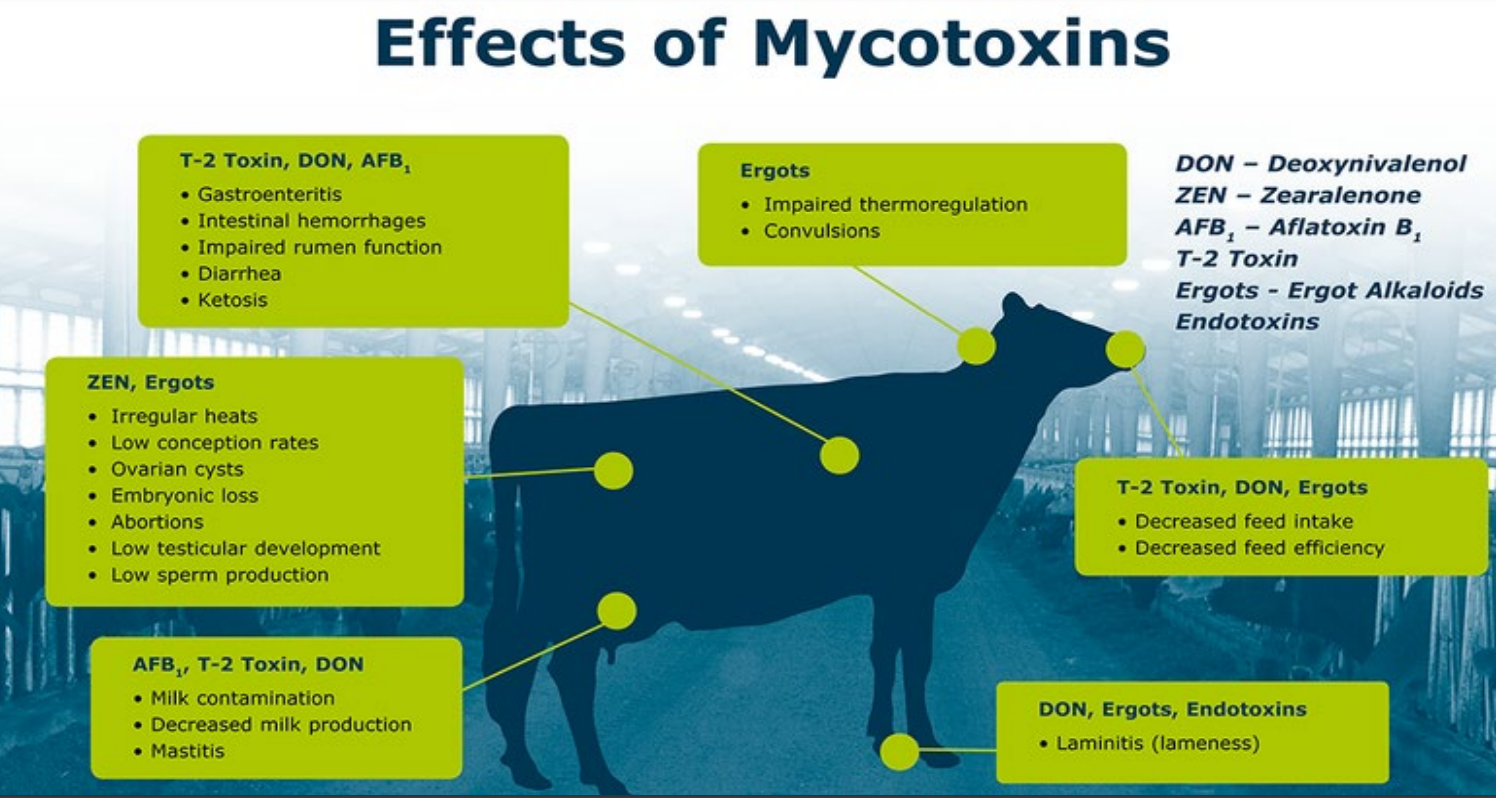 Mycotoxins are therefore products that are called secondary metabolites, meaning that they are only produced under certain conditions and are not essential to the basic functions of the mold itself.
Mycotoxins are toxic compounds produced by certain molds that can contaminate food and pose health risks to humans and animals. Their presence in agricultural products is a global concern due to their impact on food safety and economic losses. Understanding mycotoxins is essential for developing strategies to mitigate their effects.
Health professionals, doctors and scientists have learned that molds can produce secondary byproducts, called mycotoxins. These toxins can be considered poisonous and carcinogenic to humans. Essentially, mycotoxins is the defense mechanism used by certain molds to defend their territory from other molds. Until now there has not been an easy method to make the distinction between the molds producing poisonous byproducts and other, less harmful molds. Mycotoxins have been proven to be a serious health hazard. The presence of mycotoxins in schools, homes or offices can result in serious health effects. Mycotoxins in work and school environments can lead to lawsuits and lost productivity.
Keep ahead of the threat
Mycotoxins can cause a variety of adverse health effects, ranging from acute (short-term) to chronic (long-term). Aflatoxins, particularly aflatoxin b1, are among the most poisonous mycotoxins. Consumption of large amounts of aflatoxins can cause acute poisoning (aflatoxicosis), which is a life-threatening condition where the liver is damaged. Aflatoxins are also known to be genotoxic, meaning that it has the potential to cause cancer by damaging the genetic material in cells.
Long-term exposure to low levels of aflatoxins has also been associated with liver cancer in people and animals.
Food testing needs to single out and identify many different kinds of threats to health, from live microbes to contaminants from production machinery like oil and metal. One of these hazards is that of mycotoxins, which have severe health effects when consumed by humans. Fortunately, simple food testing processes can detect these compounds and prevent them from entering the food chain.
mold and mycotoxin spores need moisture in order to grow and multiply. If you have indoor leaks or areas of high humidity in your home, it’s a good idea to get them fixed. Otherwise, you may be at risk for mold contamination and, in turn, mycotoxin exposure.
Both humans and animals are daily at risk of mycotoxins [ 5 , 6 , 7 ]. Due to the large amount of grain products consumed, it becomes extremely important to check them regularly for safety and to detect harmful substances. One of the most important indicators of the quality of food and pet food and feed is the content of mycotoxins in them. They are a threat that we are not able to completely eliminate from the surrounding environment. Their occurrence is favored by factors commonly present in our environment, including humidity. Modified mycotoxins may be a particularly significant risk.