What conditions favor mycotoxins production?
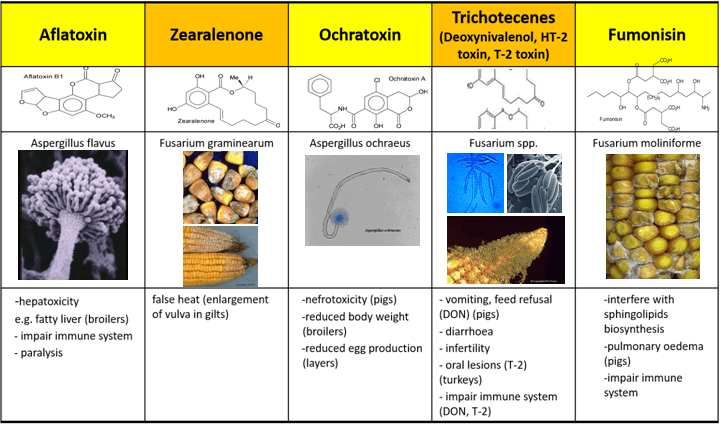
Mycotoxin: aflatoxins(b1, b2, g1, g2) source: aspergillus flavus, aspergillus parasiticus substance: grains: corn, milo, cotton seed, peanuts conditions favoring production: 78°f - 90°f (ideal) down to 55°f kernel damage high humidity or grain moisture food safety has become an important term for authorities and consumers. The aim is to keep the consumers safe from any harmful compounds and to ensure the producers from economical losses in case of an outbreak of contaminants in the production chain. The recommendations and the measures taken by the companies and the legal bodies are based on risk evaluations reported by food safety authorities [ 1 ]. Current regulations are established on scientific opinions given by eminent institutions such as fao/who joint expert committee on food additives of the united nations (jecfa) and the european food safety authority (efsa).
read more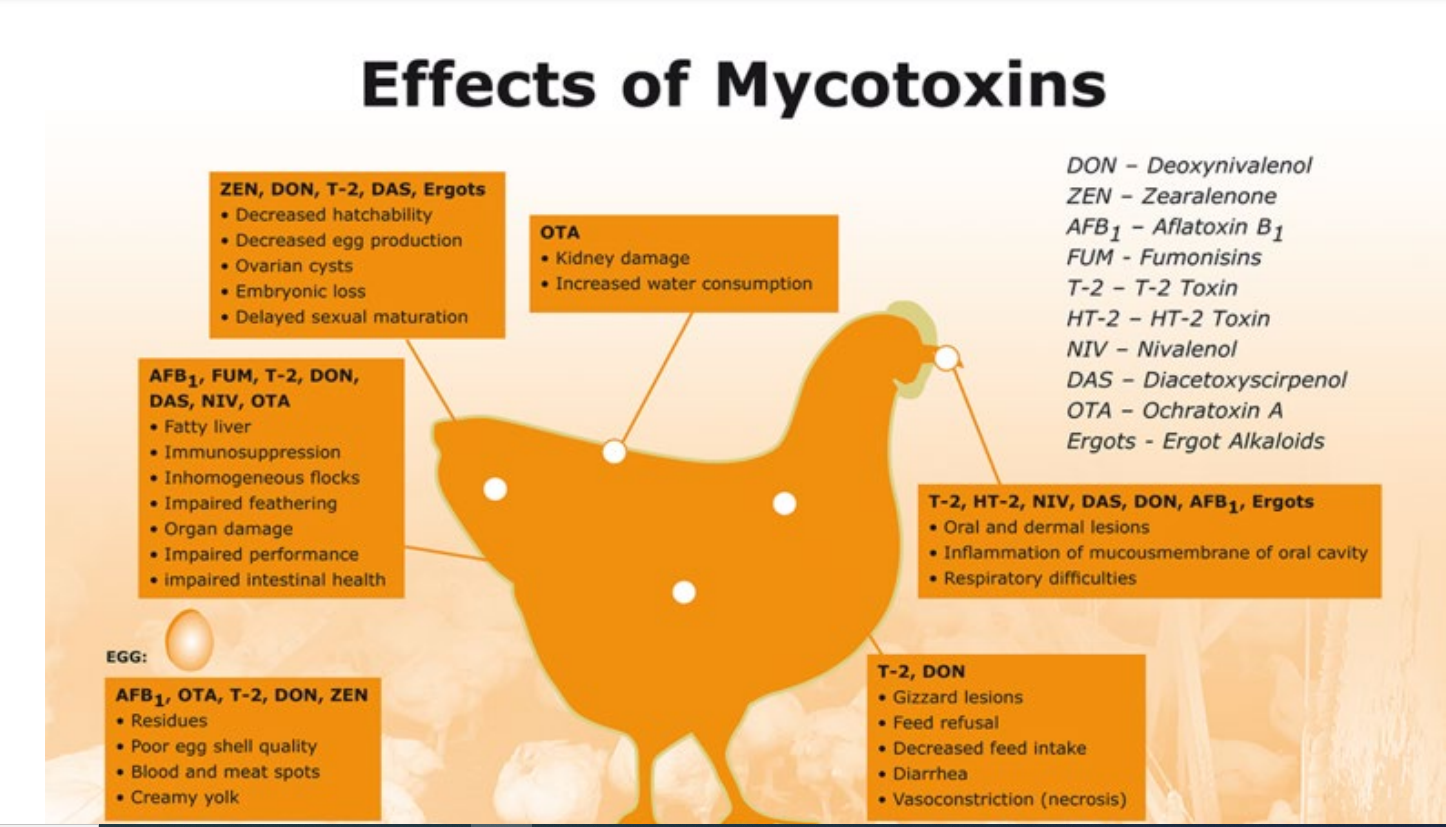
The Impact of Weather on Crops and Mycotoxin Risk
Why do molds produce mycotoxins? Mycotoxin, naturally occurring metabolite produced by certain microfungi (i. E. , molds ) that is toxic to humans and other animals. Mycotoxins occur in great number and variety, though only a small number occur regularly in human foodstuffs and animal feeds. Foods that may be affected include barley , corn , groundnuts , oats , rice , rye , sorghum , sugar , and wheat. Mycotoxins generally are distinguished from mushroom poisons , which are produced by large fungi (i. E. , mushrooms ). Mycotoxins of particular importance to the health of humans and livestock include aflatoxins , deoxynivalenol/nivalenol, fumonisins, ochratoxin, and zearalenone. Background on mycotoxins mycotoxins are naturally occurring toxins produced by certain molds (fungi). Mycotoxins are primarily found in food or structures such as water-damaged homes and buildings. According to the food and agriculture organization (fao), approximately 25% of the world’s agricultural products are contaminated with mycotoxins, and this contamination could occur before harvest, during the process of harvest, and even after harvest during the storage of these products. Mycotoxin-producing molds grow on food like cereals (corn, sorghum, wheat, and rice), oilseeds (soybean, peanut, sunflower, and cotton seeds), spices (chili peppers,
read more
3.6. Other Essential Mycotoxins
The production of toxins by molds seems to be a defense mechanism to ensure their growth, amid changes in their environment. Mycotoxins are therefore products that are called secondary metabolites, meaning that they are only produced under certain conditions and are not essential to the basic functions of the mold itself. Mycotoxins are toxic compounds produced by certain molds that can contaminate food and pose health risks to humans and animals. Their presence in agricultural products is a global concern due to their impact on food safety and economic losses. Understanding mycotoxins is essential for developing strategies to mitigate their effects. Health professionals, doctors and scientists have learned that molds can produce secondary byproducts, called mycotoxins. These toxins can be considered poisonous and carcinogenic to humans. Essentially, mycotoxins is the defense mechanism used by certain molds to defend their territory from other molds. Until now there has not been an easy method to make the distinction between the molds producing poisonous byproducts and other, less harmful molds. Mycotoxins have been proven to be a serious health hazard. The presence of mycotoxins in schools, homes or offices can result in serious health effects. Mycotoxins in work and school environments
read more
Prevalence of Mycotoxins and Their Consequences on Human Health
1department of mycology and microbiology, tea research association, north bengal regional r & d center, nagrakata, india 2horticulture crop processing division, icar-central institute of post-harvest engineering and technology, abohar, india 3department of plant pathology, ccs haryana agricultural university, hisar, india 4national institute for agricultural and veterinary research (iniav), i. P. , rua dos lagidos, lugar da madalena, vila do conde, portugal 5center for study in animal science (ceca), iceta, university of oporto, oporto, portugal 6department of botany, banaras hindu university, varanasi, india mycotoxins are toxic secondary metabolites produced by fungi when they colonies the foodstuffs. These are potent toxins having severe health consequences in people, being mutagenic, teratogenic, and carcinogenic. Understanding Mycotoxins: Types, Toxicity, and Health Effects Mycotoxins are toxic substances produced by certain types of fungi, commonly known as molds. These molds can grow on various organic materials, including crops, food products, and building materials. Mycotoxins are naturally occurring and can contaminate food and feed, posing health risks to humans and animals. Here are some key points about mycotoxins: 1. Fungal origin: mycotoxins are produced by fungi, particularly molds. Molds belong to the fungal kingdom and thrive in environments with suitable temperature, moisture, and nutrient conditions. 2. Toxicity: mycotoxins are highly toxic compounds
read more
11 Foods Most Likely to Give You Food Poisoning
Sampling skills mycotoxin contamination of foods and feeds is usually heterogeneous. Therefore, precautions must be taken in sampling to obtain a reliable quantitative estimate of the concentration of a mycotoxin in a given lot. (wood, 1992) samples must be representative of entire lot obtain samples from multiple locations use of a grain or forage sampling probe is recommended obtain samples from a moving grain stream take samples at various unloading sites 10 pounds minimum *note: not all molds (or fungi) are toxic. Part of the deleterious impact of mycotoxins on ruminants may be caused by the indirect effect of reduced nutrition from the infected grains or forages. (adapted from dr. Thompson's lecture). As consumers, we might have encountered mouldy peanuts and apples in the past. Chances are that those foods might also be contaminated with toxins produced by the moulds. Natural fungal toxins in food have been affecting human for a long time. Human poisoning resulting from mycotoxin contamination has been recorded since the middle ages. However, the modern study had only developed in the 1960s, after 100 000 young turkeys were killed in england due to peanut meal contaminated by fungal toxins. Later in 1967, 26 people in taiwan were affected by suspected food poisoning and three children died. It
read more
How Do I Avoid Mycotoxins?
As molds grow, some (but not all) of them may produce potentially toxic byproducts called mycotoxins under some conditions. Some of these molds are commonly found in moisture-damaged buildings. More than 200 mycotoxins from common molds have been identified, and many more remain to be identified. The amount and types of mycotoxins produced by a particular mold depends on many environmental and genetic factors. No one can tell whether a mold is producing mycotoxins just by looking at it. Some mycotoxins are known to affect people, but for many mycotoxins little health information is available. Research on mycotoxins is ongoing. You can take steps to help avoid exposure to mold and mycotoxins – and vital oxide is your secret weapon against both. Vital oxide harnesses the power of oxygen – in the form of chlorine dioxide (clo2) – to inhibit molds on a molecular level, neutralizing spores and inhibiting fungal growth without damaging the surfaces treated. Vital oxide is also tested and proven effective in neutralizing a range of mycotoxins. Unlike traditional cleaners and disinfectants that are only effective on hard, non-porous surfaces, vital oxide can also penetrate surfaces like carpets, upholstery, drywall, grout, concrete, and wood – and
read more
FOOD SAFETY AND REGULATION
Mycotoxins are secondary metabolites of molds that contaminate a vast range of crops and fruits. This contamination poses a significant health risk to both humans and animals due to the inherent toxicity of these compounds. As a result, ensuring food and feed safety is of paramount importance. To tackle this issue, over 100 countries have established regulations that govern the presence of mycotoxins in food and feed. In response to these regulations, there is a growing demand for reliable and efficient mycotoxin testing solutions that not only ensure compliance but also enable effective mycotoxin risk management. With over 40 years of experience in mycotoxin detection, romer labs is a leader in the field, offering an extensive portfolio of comprehensive testing solutions. To protect consumer safety there are rules and strict limits in place for aflatoxins, ochratoxin a, patulin and fusarium toxins in certain foods. Maximum levels (mls) are established in: assimilated regulation (eu) 1881/2006 for england and wales regulation (eu) 1881/2006 for northern ireland if a food business operator wishes to have samples analysed for mycotoxins in the uk, it is recommended that a laboratory accredited for mycotoxin analysis is used. Further information on accredited laboratories can be found on the united
read more
U.S. Food and Drug Administration
September 26, 2024 the u. S. Food and drug administration updated the mycotoxins in domestic and imported human foods compliance program to include the monitoring of additional mycotoxins of regulatory interest in human foods, specifically t-2/ht-2 toxins and zearalenone. The updated compliance program also reflects the transition by fda regulatory laboratories to a multi-mycotoxin method for analysis in human foods, which will allow the agency to obtain results for multiple mycotoxins in a single sample analysis. The new data gained by the compliance program update will support enforcement actions, risk assessments, and international activities, as well as provide information on mycotoxin incidence, extent of contamination, and co-occurrence. The food and drug administration (fda) has established advisory levels for don in finished wheat products for human consumption and grain and grain by-products used for animal feed. The advisory level of don for finished wheat products intended for human consumption (i. E. , flour) is 1 ppm (part per million, or mg/kg). There are specific advisory levels for grain and grain byproducts for beef and dairy cattle, chickens, and swine. For all other animals, the advisory level is 5 ppm, with the recommendations that the ingredients do not exceed
read more